Crypto DeFi Trading Bitcoin Derivatives

Spot vs Futures Trading: What New Users Always Get Wrong

Coinbelieve News
Coinbelieve News
@coinbelieve_news
1mo ago
Edited
32
... min
Spot vs Futures Trading: What New Users Always Get Wrong

Quick Briefing

  • Here's the scoop: Spot trading means you actually own the crypto you buy, like getting a physical coin, while futures trading is just betting on its price with borrowed money (leverage) – no ownership, just a contract.
  • Why this matters big time: If you're new, understanding this isn't just theory; it's your shield against rapid capital loss. Spot trading is your safe learning ground to get market feel without the fear of your positions being forcibly closed.
  • The key risk to watch out for, especially with futures, is leverage. It’s a total capital incinerator for beginners, turning small price swings into instant liquidation and zeroed accounts. Don't fall for the "faster returns" myth – it usually means faster losses.

This document is an educational reference intended to explain the structural differences between spot trading and futures trading in cryptocurrency markets. It is written for beginners and early-stage participants who require clarity, accuracy, and risk awareness before engaging in trading activity.

The objective of this guide is not to promote any trading style, but to present factual differences, operational mechanics, and risk characteristics so that readers can make informed decisions.

Sponsored


1. Definition of Spot Trading

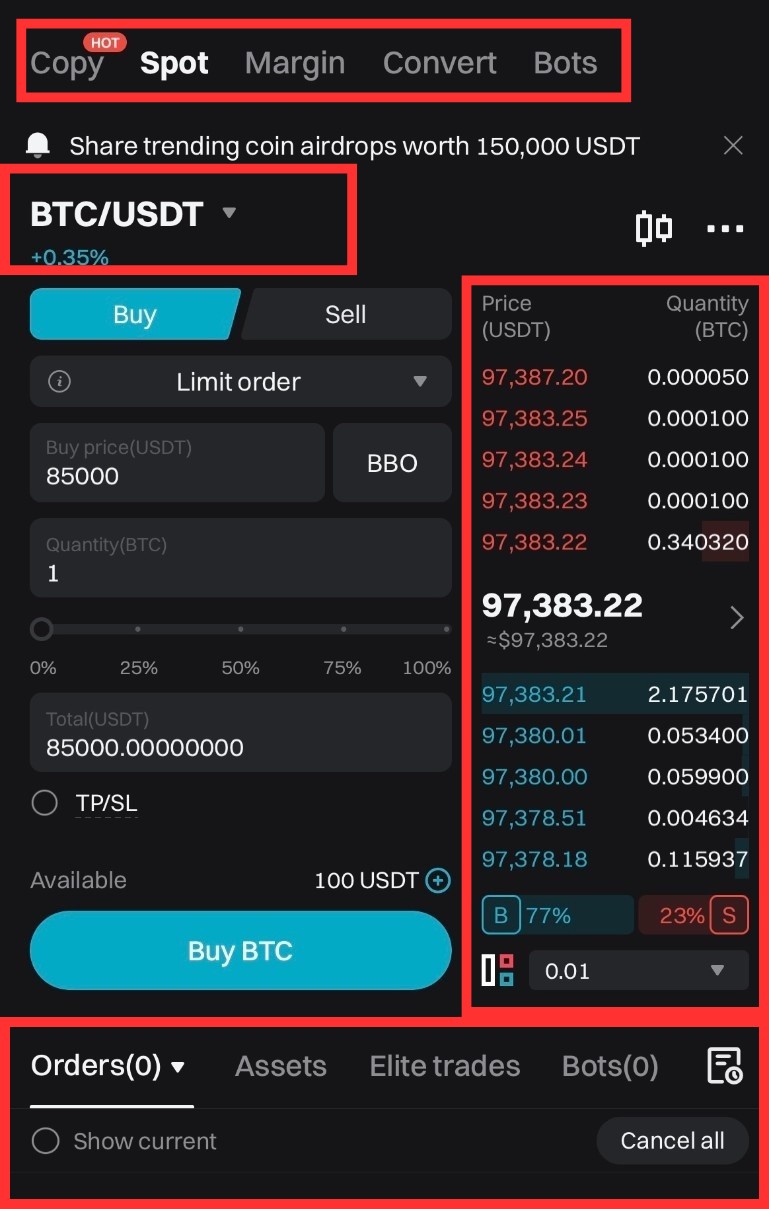
Spot trading refers to the purchase or sale of a cryptocurrency for immediate settlement, where ownership of the asset is transferred to the buyer.

Key characteristics of spot trading:

  1. The trader acquires ownership of the cryptocurrency.

  2. Transactions are settled immediately.

    Sponsored
  3. No leverage is involved.

  4. Positions cannot be liquidated by an exchange.

  5. There is no expiration date on holdings.

Illustrative example: A user purchases ETH at a market price of $2,000.

  1. If the market price declines to $1,600, the position remains open.

  2. If the market price increases to $3,000, the asset may be sold at the user’s discretion.

In spot trading, unrealized losses do not result in forced position closure.

Research Image
Source: Bitget

2. Definition of Futures Trading

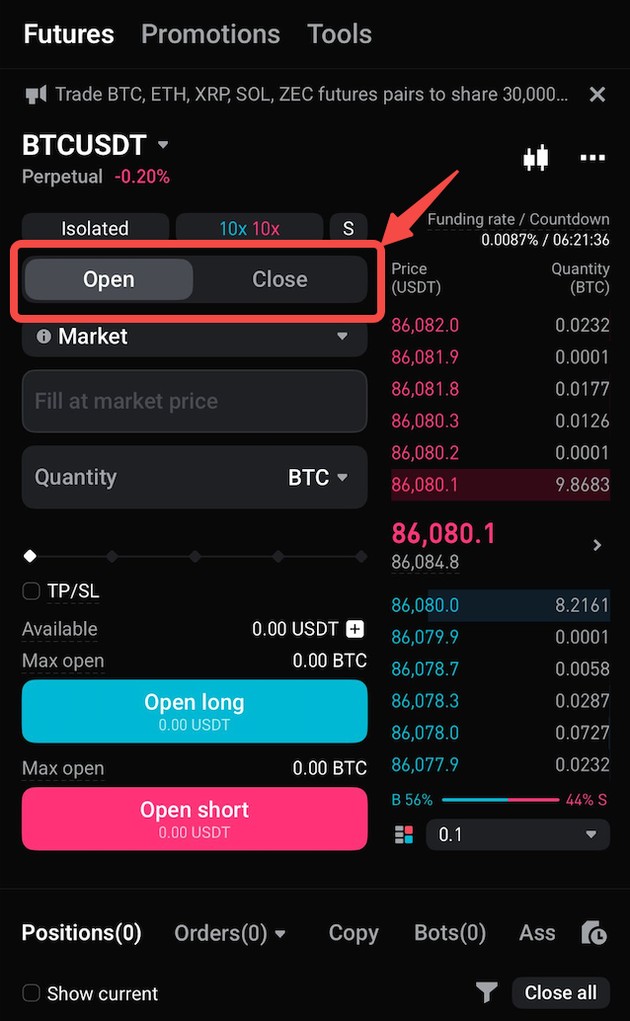
Futures trading involves entering a contract that derives its value from the price of an underlying cryptocurrency. The trader does not own the underlying asset.

Key characteristics of futures trading:

  1. No ownership of the cryptocurrency is obtained.

  2. Positions are opened using margin and leverage.

  3. Price movements are amplified relative to capital used.

  4. Positions are subject to liquidation if margin requirements are breached.

  5. Funding rates and fees apply over time.

Illustrative example: A user opens a leveraged futures position with $1,000 at 10Γ— leverage.

  1. The effective exposure becomes $10,000.

  2. A price movement of approximately 8–10% against the position can result in liquidation.

  3. Liquidation results in loss of the allocated margin, regardless of subsequent price recovery.

Research Image
Source: Bitget


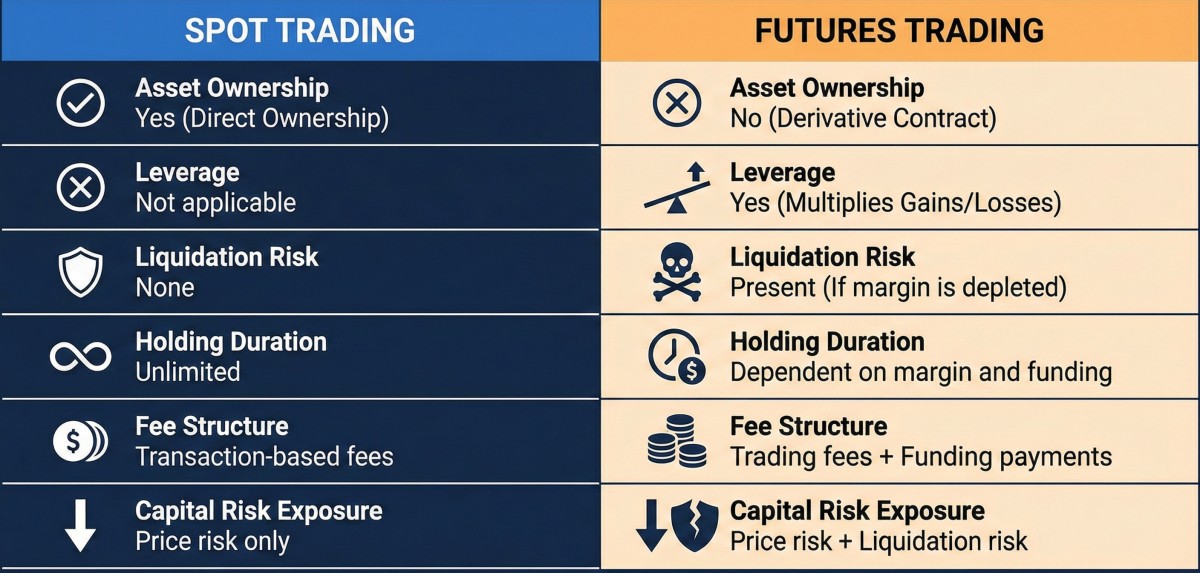
3. Structural Comparison: Spot vs Futures

Spot Trading

  1. Asset ownership: Yes

  2. Leverage: Not applicable

  3. Liquidation risk: None

  4. Holding duration: Unlimited

  5. Fee structure: Transaction-based

Futures Trading

  1. Asset ownership: No

  2. Leverage: Yes

  3. Liquidation risk: Present

  4. Holding duration: Dependent on margin and funding

  5. Fee structure: Trading fees plus funding payments

Spot trading exposes capital to price risk only. Futures trading exposes capital to both price risk and liquidation risk.

Research Image
Source: CoinBelieve


4. Risk Profile for New Market Participants

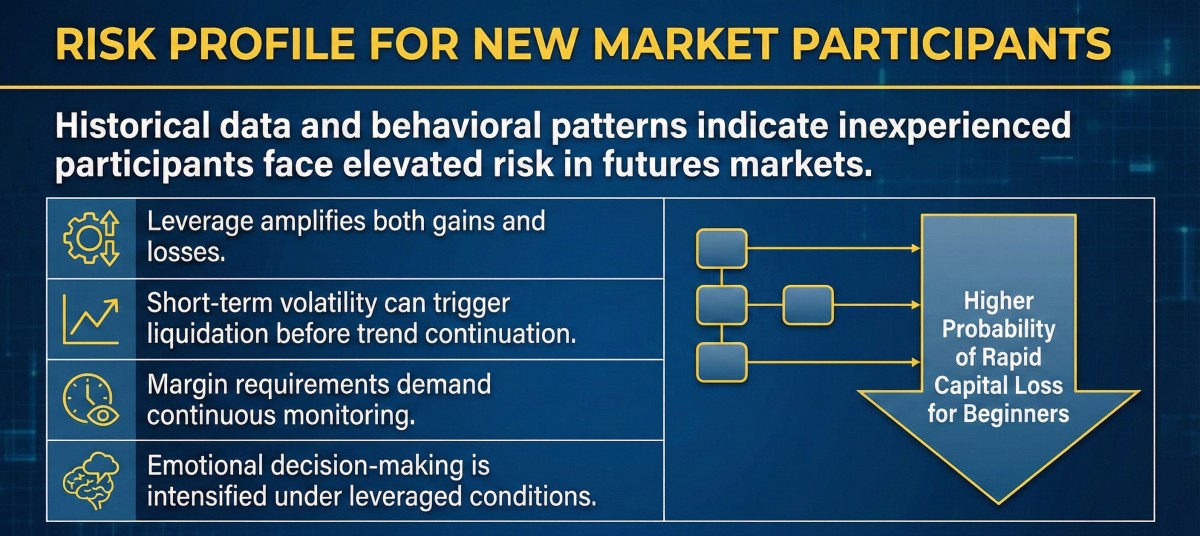
Historical market data and behavioral patterns indicate that inexperienced participants face elevated risk in futures markets due to the following factors:

  1. Leverage amplifies both gains and losses.

  2. Short-term volatility can trigger liquidation before trend continuation.

  3. Margin requirements demand continuous monitoring.

  4. Emotional decision-making is intensified under leveraged conditions.

As a result, futures trading presents a higher probability of rapid capital loss for beginners.

Research Image
Source: CoinBelieve


5. Common Misinterpretations

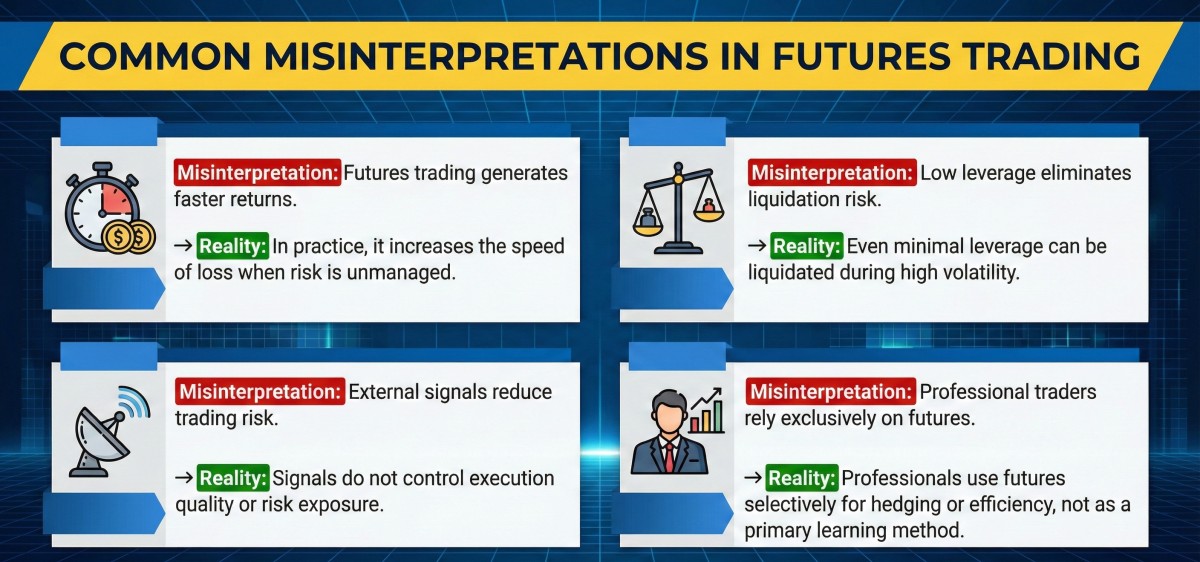
  1. Futures trading generates faster returns. β†’ In practice, it increases the speed of loss when risk is unmanaged.

  2. Low leverage eliminates liquidation risk. β†’ Even minimal leverage can be liquidated during high volatility.

  3. External signals reduce trading risk. β†’ Signals do not control execution quality or risk exposure.

  4. Professional traders rely exclusively on futures. β†’ Professionals use futures selectively for hedging or efficiency, not as a primary learning method.

Research Image
Source: CoinBelieve


6. Educational Role of Spot Trading

For beginners, spot trading serves as a foundational learning environment by allowing:

  1. Observation of market cycles.

  2. Development of risk awareness.

  3. Familiarity with order execution.

  4. Experience without forced liquidation risk.

Spot trading enables capital preservation while market understanding develops.


7. Conditions Under Which Futures Trading May Be Considered

Futures trading may be considered only after the following conditions are met:

  1. Demonstrated understanding of spot market behavior.

  2. Defined risk management framework.

  3. Consistent position sizing discipline.

  4. Acceptance of loss as part of trading activity.

Absent these conditions, futures trading functions primarily as a speculative activity.


8. Recommended Learning Progression

  1. Begin with spot trading exclusively.

  2. Focus on liquid, established assets.

  3. Study volatility, support, and resistance behavior.

  4. Observe funding rates and derivatives data without trading.

  5. Transition to limited futures exposure only if necessary.

Long-term participation does not require futures trading.


Conclusion

Spot trading and futures trading serve fundamentally different purposes.

Spot trading prioritizes asset ownership and capital durability. Futures trading prioritizes leverage and short-term exposure efficiency.

For new participants, understanding these differences is essential before allocating capital.


Quick Test

Intel Check Test your knowledge

What is the main purpose of spot trading compared to futures?

Intel Check Test your knowledge

When should futures trading be considered?

Intel Check Test your knowledge

Why is spot trading recommended as a learning environment?

Intel Check Test your knowledge

Which is a common misconception about futures trading?

Intel Check Test your knowledge

Why are beginners at higher risk in futures markets?

Intel Check Test your knowledge

Which type of trading exposes capital to both price risk and liquidation risk?

Intel Check Test your knowledge

What is the primary cause of liquidation in futures trading?

Intel Check Test your knowledge

What does a trader own in futures trading?

Intel Check Test your knowledge

What happens to a spot position if the market price drops?

Intel Check Test your knowledge

In spot trading, what does the trader acquire?


#CryptoEducation #SpotTrading #FuturesTrading #CryptoBasics #CryptoGuide #TradingEducation #CryptoLearning



Coinbelieve News

About Coinbelieve News

🟒 Official news and research channel of CoinBelieve, delivering verified crypto market updates, on-chain analysis, macro insights, and risk signals with institutional-grade clarity and precision. 🟒

View Profile
GUIDE Β· Saturday, December 27, 2025 Β· 4:30 AM CoinBelieve Intelligence Vol. 2026 Β· res_694fa739d1bf90.46624108
Guide

CoinBelieve

Crypto Β· DeFi Β· Trading Β· Bitcoin Β· Derivatives  |  Est. Read: β€” min  |  32 Reads

Spot vs Futures Trading: What New Users Always Get Wrong

⚑ Quick Briefing
  • Here's the scoop: Spot trading means you actually own the crypto you buy, like getting a physical coin, while futures trading is just betting on its price with borrowed money (leverage) – no ownership, just a contract.
  • Why this matters big time: If you're new, understanding this isn't just theory; it's your shield against rapid capital loss. Spot trading is your safe learning ground to get market feel without the fear of your positions being forcibly closed.
  • The key risk to watch out for, especially with futures, is leverage. It’s a total capital incinerator for beginners, turning small price swings into instant liquidation and zeroed accounts. Don't fall for the "faster returns" myth – it usually means faster losses.

This document is an educational reference intended to explain the structural differences between spot trading and futures trading in cryptocurrency markets. It is written for beginners and early-stage participants who require clarity, accuracy, and risk awareness before engaging in trading activity.

The objective of this guide is not to promote any trading style, but to present factual differences, operational mechanics, and risk characteristics so that readers can make informed decisions.


1. Definition of Spot Trading

Spot trading refers to the purchase or sale of a cryptocurrency for immediate settlement, where ownership of the asset is transferred to the buyer.

Key characteristics of spot trading:

  1. The trader acquires ownership of the cryptocurrency.

  2. Transactions are settled immediately.

  3. No leverage is involved.

  4. Positions cannot be liquidated by an exchange.

  5. There is no expiration date on holdings.

Illustrative example: A user purchases ETH at a market price of $2,000.

  1. If the market price declines to $1,600, the position remains open.

  2. If the market price increases to $3,000, the asset may be sold at the user’s discretion.

In spot trading, unrealized losses do not result in forced position closure.


Research Image
Source: Bitget

2. Definition of Futures Trading

Futures trading involves entering a contract that derives its value from the price of an underlying cryptocurrency. The trader does not own the underlying asset.

Key characteristics of futures trading:

  1. No ownership of the cryptocurrency is obtained.

  2. Positions are opened using margin and leverage.

  3. Price movements are amplified relative to capital used.

  4. Positions are subject to liquidation if margin requirements are breached.

  5. Funding rates and fees apply over time.

Illustrative example: A user opens a leveraged futures position with $1,000 at 10Γ— leverage.

  1. The effective exposure becomes $10,000.

  2. A price movement of approximately 8–10% against the position can result in liquidation.

  3. Liquidation results in loss of the allocated margin, regardless of subsequent price recovery.


Research Image
Source: Bitget


3. Structural Comparison: Spot vs Futures

Spot Trading

  1. Asset ownership: Yes

  2. Leverage: Not applicable

  3. Liquidation risk: None

  4. Holding duration: Unlimited

  5. Fee structure: Transaction-based

Futures Trading

  1. Asset ownership: No

  2. Leverage: Yes

  3. Liquidation risk: Present

  4. Holding duration: Dependent on margin and funding

  5. Fee structure: Trading fees plus funding payments

Spot trading exposes capital to price risk only. Futures trading exposes capital to both price risk and liquidation risk.


Research Image
Source: CoinBelieve


4. Risk Profile for New Market Participants

Historical market data and behavioral patterns indicate that inexperienced participants face elevated risk in futures markets due to the following factors:

  1. Leverage amplifies both gains and losses.

  2. Short-term volatility can trigger liquidation before trend continuation.

  3. Margin requirements demand continuous monitoring.

  4. Emotional decision-making is intensified under leveraged conditions.

As a result, futures trading presents a higher probability of rapid capital loss for beginners.


Research Image
Source: CoinBelieve


5. Common Misinterpretations

  1. Futures trading generates faster returns. β†’ In practice, it increases the speed of loss when risk is unmanaged.

  2. Low leverage eliminates liquidation risk. β†’ Even minimal leverage can be liquidated during high volatility.

  3. External signals reduce trading risk. β†’ Signals do not control execution quality or risk exposure.

  4. Professional traders rely exclusively on futures. β†’ Professionals use futures selectively for hedging or efficiency, not as a primary learning method.


Research Image
Source: CoinBelieve


6. Educational Role of Spot Trading

For beginners, spot trading serves as a foundational learning environment by allowing:

  1. Observation of market cycles.

  2. Development of risk awareness.

  3. Familiarity with order execution.

  4. Experience without forced liquidation risk.

Spot trading enables capital preservation while market understanding develops.


7. Conditions Under Which Futures Trading May Be Considered

Futures trading may be considered only after the following conditions are met:

  1. Demonstrated understanding of spot market behavior.

  2. Defined risk management framework.

  3. Consistent position sizing discipline.

  4. Acceptance of loss as part of trading activity.

Absent these conditions, futures trading functions primarily as a speculative activity.


8. Recommended Learning Progression

  1. Begin with spot trading exclusively.

  2. Focus on liquid, established assets.

  3. Study volatility, support, and resistance behavior.

  4. Observe funding rates and derivatives data without trading.

  5. Transition to limited futures exposure only if necessary.

Long-term participation does not require futures trading.


Conclusion

Spot trading and futures trading serve fundamentally different purposes.

Spot trading prioritizes asset ownership and capital durability. Futures trading prioritizes leverage and short-term exposure efficiency.

For new participants, understanding these differences is essential before allocating capital.


Quick Test


#CryptoEducation #SpotTrading #FuturesTrading #CryptoBasics #CryptoGuide #TradingEducation #CryptoLearning


Coinbelieve News
Coinbelieve News
Official Account

"🟒 Official news and research channel of CoinBelieve, delivering verified crypto market updates, on-chain analysis, macro insights, and risk signals wi..."

View Full Profile β†’
More from Coinbelieve

What Strategy’s Pause in Bitcoin Buying Signals for Short-Term Market Demand

30 reads  Β·  Dec 22, 2025

Tether Makes €1.1 Billion Juventus Bid, Expanding Crypto Capital Into Global Sports

12 reads  Β·  Dec 13, 2025

Filed Under
Crypto DeFi Trading Bitcoin Derivatives
Share This Report
𝕏 Twitter Telegram
Β© 2026 CoinBelieve Β· All Rights Reserved Β· coinbelieve.com
Newspaper Mode
Success