
Quick Briefing
- The big picture is that Bitcoin ETFs have seen a quiet but steady wave of selling from institutional investors who are deliberately reducing their crypto exposure, not panicking.
- This matters because these persistent ETF sales inject continuous supply into the market, acting like a constant headwind that makes it tough for Bitcoin to sustain rallies and break out of its current range.
- So, what's the catch? Bitcoin's price is likely to stay stuck in a range, with advances being short-lived, until we see these ETF outflows slow down significantly or, even better, start to reverse into net inflows. That's the real game changer.
U.S. spot Bitcoin ETFs have just gone through their weakest two‑month period since launch. Over November and December, more than $4.5 billion flowed out of these products, making it the largest sustained withdrawal phase on record.
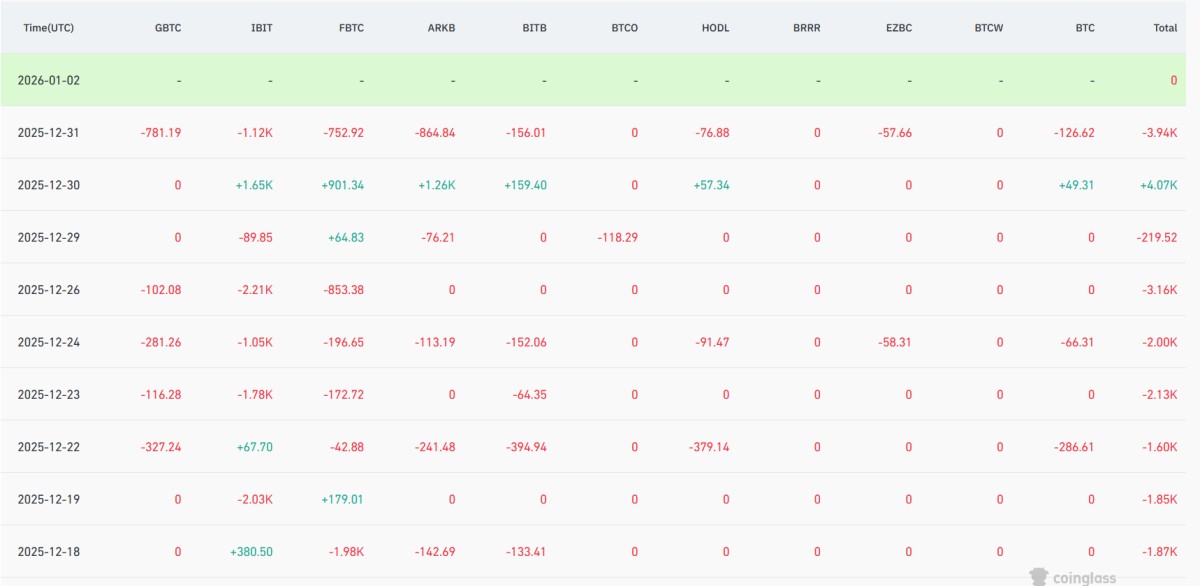
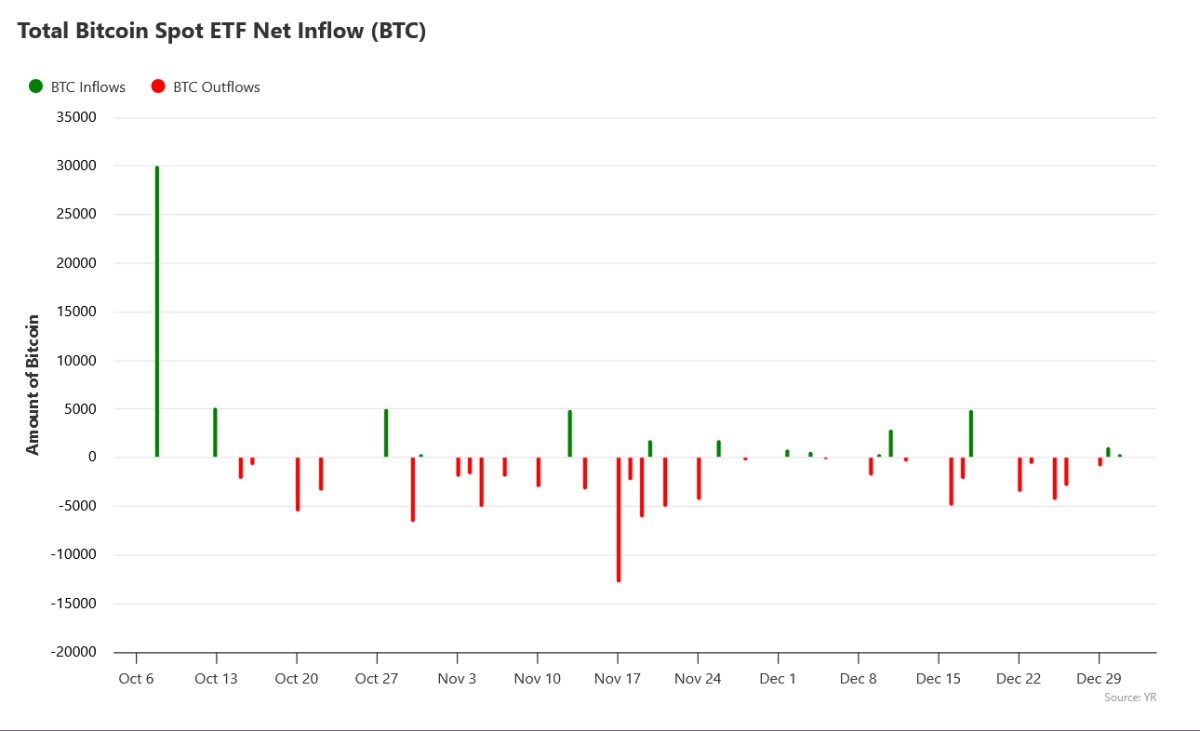
What matters most is not only the size of the outflows, but how they occurred. Redemptions were steady and extended over several weeks rather than concentrated around a single shock. On average, ETFs were net sellers of roughly 500 to 1000 $BTC per day, a pace that points to deliberate exposure reduction rather than panic-driven exits.
Because spot ETFs must sell underlying Bitcoin to meet redemptions, these flows translated directly into additional supply entering the market. The effect was visible in price behavior. Bitcoin did not experience a sharp breakdown. Instead, it traded within a broad range, struggled to sustain breakouts, and consistently faded after short-lived rallies. This is a typical response when continuous supply meets stable but cautious demand.
ETF activity has played a central role in shaping recent liquidity conditions. When ETFs are net buyers, pullbacks tend to find support quickly and upward momentum builds more easily. When ETFs are persistent sellers, rallies face friction. Volatility can increase, but price struggles to establish a clear direction as buying interest is absorbed by ongoing distribution.
This environment should not be interpreted as a breakdown in Bitcoin’s longer-term outlook. Rather, it reflects a shift in positioning. Institutional investors appear to have moved into a risk-reduction phase, adjusting exposure amid uncertain macro conditions and tighter liquidity.
The next meaningful change in price behavior is likely to depend on ETF flows themselves. A slowdown in redemptions, or a return to consistent inflows, would reduce supply pressure and improve the durability of upside moves. Until then, Bitcoin is likely to remain range-bound, with advances proving difficult to sustain.
In summary, while the market may appear stable on the surface, ETF flow data suggests underlying demand has softened. Understanding these mechanics helps explain why recent price action has lacked conviction despite periods of elevated trading activity.

Intelligence Stream
Why Crypto Struggles in Early 2026 — The Real Barriers Explained
48 Reads
Author Update
Bitcoin Holds Firm Near $95K as Data Shows Strong Market Control
16 Reads
Author Update
Bitcoin and Gold ETF Volumes Point to a Risk-Off Rotation
15 Reads
Author Update
📢 Official Announcement — CoinBelieve Monetization Is Live
56 Reads
Most Viewed