
Crypto DeFi ETF Bitcoin

How UBS’s Crypto Plan Could Reshape Wealth Management and Bitcoin Demand

Meow Alert
Meow Alert
@dorazombiiee
29d ago
Edited
20
... min
How UBS’s Crypto Plan Could Reshape Wealth Management and Bitcoin Demand

Quick Briefing

  • Here's the scoop: UBS, one of the biggest wealth managers on the planet, is finally letting its super-rich private banking clients get into crypto, mainly Bitcoin and Ethereum. This isn't them chasing hype; it's a strategic move because their clients have been demanding it, and the regulatory picture is getting clearer.
  • The big picture is this is a huge step towards crypto becoming a normal part of serious investing. This kind of capital from private banks moves slowly and stays invested, which over time brings stability and depth to the market, slowly but surely making digital assets a standard offering rather than a niche exception.
  • Just don't expect a sudden rocket launch for prices. This is a quiet, gradual rollout for a very select group, focusing on long-term portfolio allocation, not quick trading. So, don't misread it as a signal for immediate gains; it's about fundamental, structural normalization.
The report that UBS is preparing to offer cryptocurrency access to select private-banking clients is not a market-moving headline, and it was never meant to be. Its importance lies elsewhere. This is a structural decision by one of the world’s largest wealth managers, and it fits a pattern that has played out repeatedly as new asset classes are absorbed into traditional finance.
Large banks do not adopt crypto because prices are rising. They move when client demand becomes persistent and when regulation becomes workable. That is what has happened here. For years, high-net-worth clients have asked for regulated crypto exposure. When banks declined, capital moved outside the traditional wealth-management system. From a private bank’s perspective, that is not a philosophical debate; it is a business risk.

Earlier institutional adopters followed the same logic. JPMorgan built blockchain settlement and payment infrastructure long before allowing client exposure. Morgan Stanley introduced crypto only for a narrow group of wealthy clients and only through controlled products. In both cases, the objective was to retain assets and relevance, not to promote crypto trading. UBS is now applying the same playbook, but under more favorable conditions.

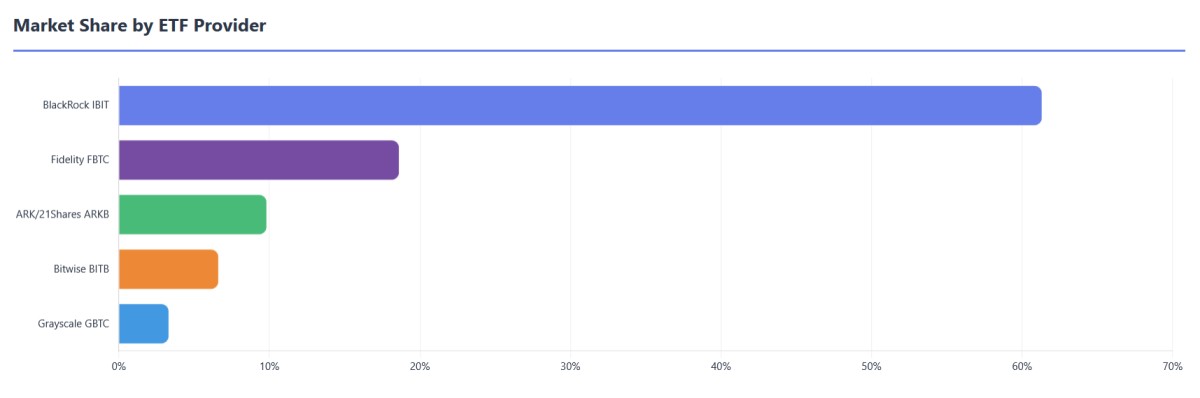
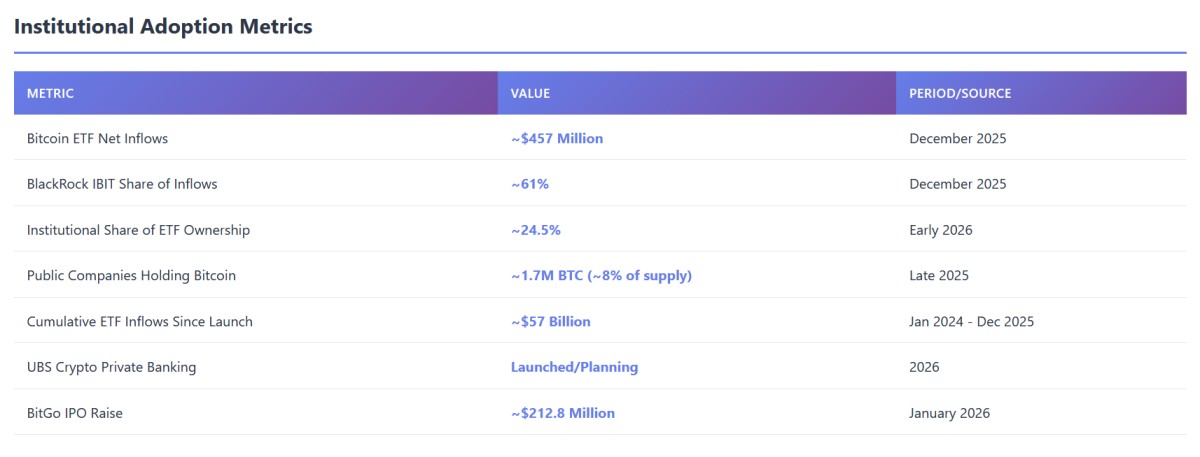
What makes this moment different is timing. UBS is moving after regulatory clarity in Switzerland improved and after institutional demand has already been demonstrated through ETF flows and professional custody growth. The bank is not testing whether demand exists; it is responding to demand that has already proven durable.
Research Image
Source: CoinBelieve

The expected structure of the offering reflects that mindset. Access is likely to be limited, focused on Bitcoin and Ethereum, and delivered through regulated third-party partners. There is no indication of a broad retail rollout, leverage, or speculative product design. Crypto is being positioned as a portfolio allocation, not a trading instrument. That is how private banks introduce new assets when they intend to keep them.

Sponsored

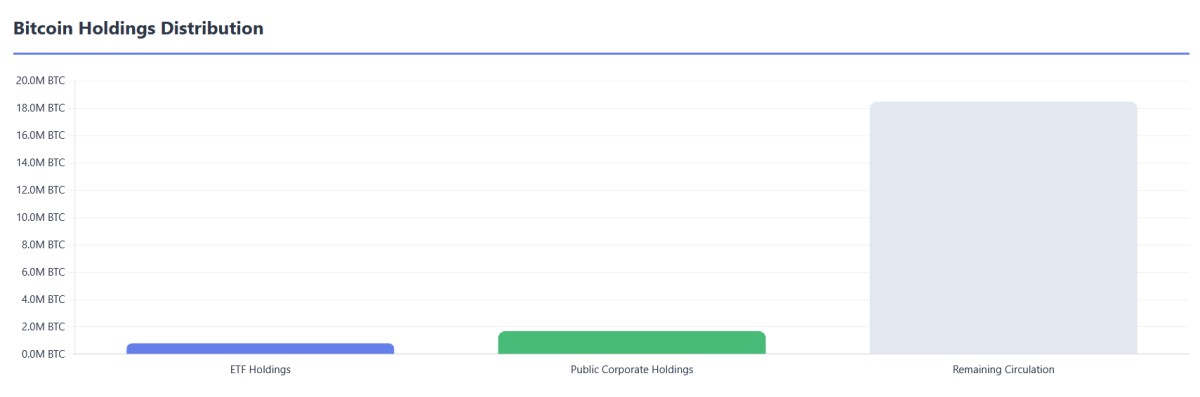
The market impact of this approach is subtle but meaningful. Private-bank capital allocates slowly, holds longer, and rebalances rather than trades emotionally. Even small percentage allocations at this scale can represent significant capital, not because they arrive all at once, but because they tend to stay invested. Over time, this type of demand strengthens market depth rather than increasing volatility.
Research Image
Source: CoinBelieve

History suggests a clear sequence from here. A limited pilot comes first, focused on compliance and operational reliability. If that proves stable, access expands quietly across regions where regulation allows. Eventually, crypto exposure stops being treated as an exception and becomes a standard option within diversified portfolios. By the time that stage is visible, the structural shift is already complete.


This is why developments like this are often misread. They do not produce immediate price reactions, and they do not come with aggressive announcements. But they matter because they change how capital is allowed to flow. UBS is not making a bet on short-term performance. It is acknowledging that digital assets have become difficult to exclude from modern wealth management.

Seen in that light, this move does not signal excitement. It signals normalization. And in financial markets, normalization is usually what lasts.
Research Image
Source: CoinBelieve

#UBS #Bitcoin #CryptoAdoption #InstitutionalAdoption #WealthManagement #BitcoinETF #DigitalAssets #PrivateBanking #InstitutionalCrypto


RESEARCH · Saturday, January 24, 2026 · 1:51 AM CoinBelieve Intelligence Vol. 2026 · res_69746be14e7168.95655546
Research

CoinBelieve

Crypto · DeFi · ETF · Bitcoin  |  Est. Read: min  |  20 Reads

How UBS’s Crypto Plan Could Reshape Wealth Management and Bitcoin Demand

⚡ Quick Briefing
  • Here's the scoop: UBS, one of the biggest wealth managers on the planet, is finally letting its super-rich private banking clients get into crypto, mainly Bitcoin and Ethereum. This isn't them chasing hype; it's a strategic move because their clients have been demanding it, and the regulatory picture is getting clearer.
  • The big picture is this is a huge step towards crypto becoming a normal part of serious investing. This kind of capital from private banks moves slowly and stays invested, which over time brings stability and depth to the market, slowly but surely making digital assets a standard offering rather than a niche exception.
  • Just don't expect a sudden rocket launch for prices. This is a quiet, gradual rollout for a very select group, focusing on long-term portfolio allocation, not quick trading. So, don't misread it as a signal for immediate gains; it's about fundamental, structural normalization.
The report that UBS is preparing to offer cryptocurrency access to select private-banking clients is not a market-moving headline, and it was never meant to be. Its importance lies elsewhere. This is a structural decision by one of the world’s largest wealth managers, and it fits a pattern that has played out repeatedly as new asset classes are absorbed into traditional finance.
Large banks do not adopt crypto because prices are rising. They move when client demand becomes persistent and when regulation becomes workable. That is what has happened here. For years, high-net-worth clients have asked for regulated crypto exposure. When banks declined, capital moved outside the traditional wealth-management system. From a private bank’s perspective, that is not a philosophical debate; it is a business risk.

Earlier institutional adopters followed the same logic. JPMorgan built blockchain settlement and payment infrastructure long before allowing client exposure. Morgan Stanley introduced crypto only for a narrow group of wealthy clients and only through controlled products. In both cases, the objective was to retain assets and relevance, not to promote crypto trading. UBS is now applying the same playbook, but under more favorable conditions.

What makes this moment different is timing. UBS is moving after regulatory clarity in Switzerland improved and after institutional demand has already been demonstrated through ETF flows and professional custody growth. The bank is not testing whether demand exists; it is responding to demand that has already proven durable.

Source: CoinBelieve

The expected structure of the offering reflects that mindset. Access is likely to be limited, focused on Bitcoin and Ethereum, and delivered through regulated third-party partners. There is no indication of a broad retail rollout, leverage, or speculative product design. Crypto is being positioned as a portfolio allocation, not a trading instrument. That is how private banks introduce new assets when they intend to keep them.


The market impact of this approach is subtle but meaningful. Private-bank capital allocates slowly, holds longer, and rebalances rather than trades emotionally. Even small percentage allocations at this scale can represent significant capital, not because they arrive all at once, but because they tend to stay invested. Over time, this type of demand strengthens market depth rather than increasing volatility.

Source: CoinBelieve

History suggests a clear sequence from here. A limited pilot comes first, focused on compliance and operational reliability. If that proves stable, access expands quietly across regions where regulation allows. Eventually, crypto exposure stops being treated as an exception and becomes a standard option within diversified portfolios. By the time that stage is visible, the structural shift is already complete.


This is why developments like this are often misread. They do not produce immediate price reactions, and they do not come with aggressive announcements. But they matter because they change how capital is allowed to flow. UBS is not making a bet on short-term performance. It is acknowledging that digital assets have become difficult to exclude from modern wealth management.

Seen in that light, this move does not signal excitement. It signals normalization. And in financial markets, normalization is usually what lasts.

© 2026 CoinBelieve · All Rights Reserved · coinbelieve.com
Newspaper Mode
Success