

Bitcoin ETF activity has slowed meaningfully. Over the past several sessions, the largest spot Bitcoin ETF, IBIT, was consistently trading in the 50–79 million shares per day range, reflecting strong institutional participation and active positioning. In the most recent session, that volume dropped to roughly 38.3 million shares. This is a notable contraction, not just a minor fluctuation, and it signals a cooling in short-term demand rather than aggressive selling.
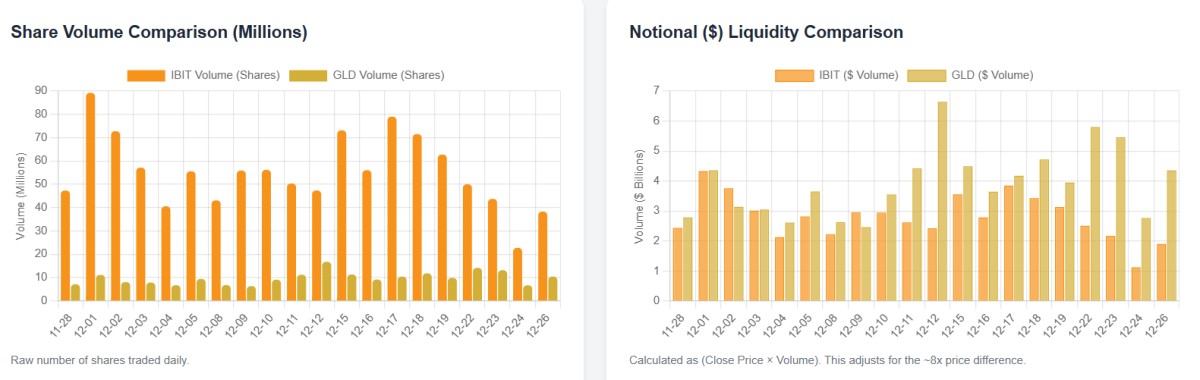
Source: investing.com/twelvedata.com
At the same time, gold ETFs are showing sustained strength. GLD has recently recorded volumes close to 16 million shares, which sits above its typical average. Importantly, this increase in gold ETF activity has occurred while $BTC ETF volumes have been declining, highlighting a divergence in capital allocation. When this kind of divergence appears, it usually points to investors favoring capital preservation over risk exposure.
This dynamic helps explain current price behavior. Bitcoin is struggling to sustain upward momentum, rebounds are shallow, and the market feels heavy despite the absence of negative crypto-specific news. The issue is not supply pressure, but reduced urgency on the demand side. Liquidity is still present, but it is temporarily parked in safer assets.
Bottom line: ETF volumes currently show a risk-off rotation, with participation easing in Bitcoin ETFs and strengthening in gold ETFs. As long as this imbalance persists, crypto markets are likely to remain range-bound and capped on the upside. A meaningful shift in momentum will require $BTC ETF volumes to re-expand — that will be the first reliable signal that risk appetite is returning.