Crypto Bitcoin ETF Derivatives

Bitcoin Accumulation Has Stopped: ETF Outflows and Whale Activity Signal Market Shift

Meow Alert
Meow Alert
@dorazombiiee
5d ago
Edited
15
... min
Bitcoin Accumulation Has Stopped: ETF Outflows and Whale Activity Signal Market Shift

Quick Briefing

  • Here's the scoop: That strong Bitcoin accumulation phase we saw right after the October crash? It's totally over. All the signs – ETF flows, whale activity, exchange reserves – are screaming that big institutions and whales have stopped buying aggressively and are now in a more cautious, even distributive, mode, making the market much more fragile.
  • The big picture is, we've lost that key institutional buying pressure that was soaking up supply and providing a floor. We're not in a crash, but without those big players consistently entering, the market is in a "fragile equilibrium." This means significant upward momentum is unlikely for now, and we might see more sideways action or even dips until that institutional demand truly returns.
  • So, what to watch out for? Keep a close eye on those ETF outflows – they're no longer net positive. Also, whales are increasingly moving Bitcoin to exchanges, which hints at potential selling or distribution. Until we see consistent accumulation resume and institutions show strong demand again, the market is structurally weak, so tread carefully!

Since the October 10 crash, Bitcoin has gone through a major structural shift. The difference between that period and now is not just price, but how liquidity, institutions, and whales are behaving. Yes, some of the recent weakness is influenced by macro conditions, including tighter liquidity and institutional caution, but this article focuses only on structure — whether the bear phase has improved structurally or not. When you analyze exchange reserves, ETF flows, whale activity, Coinbase premium, funding rates, and open interest together, the message is clear: the strong accumulation phase that followed the crash has ended, and the market structure has moved into a more fragile state.

After the October crash, institutions absorbed supply aggressively
Research Image
Research Image

Sponsored

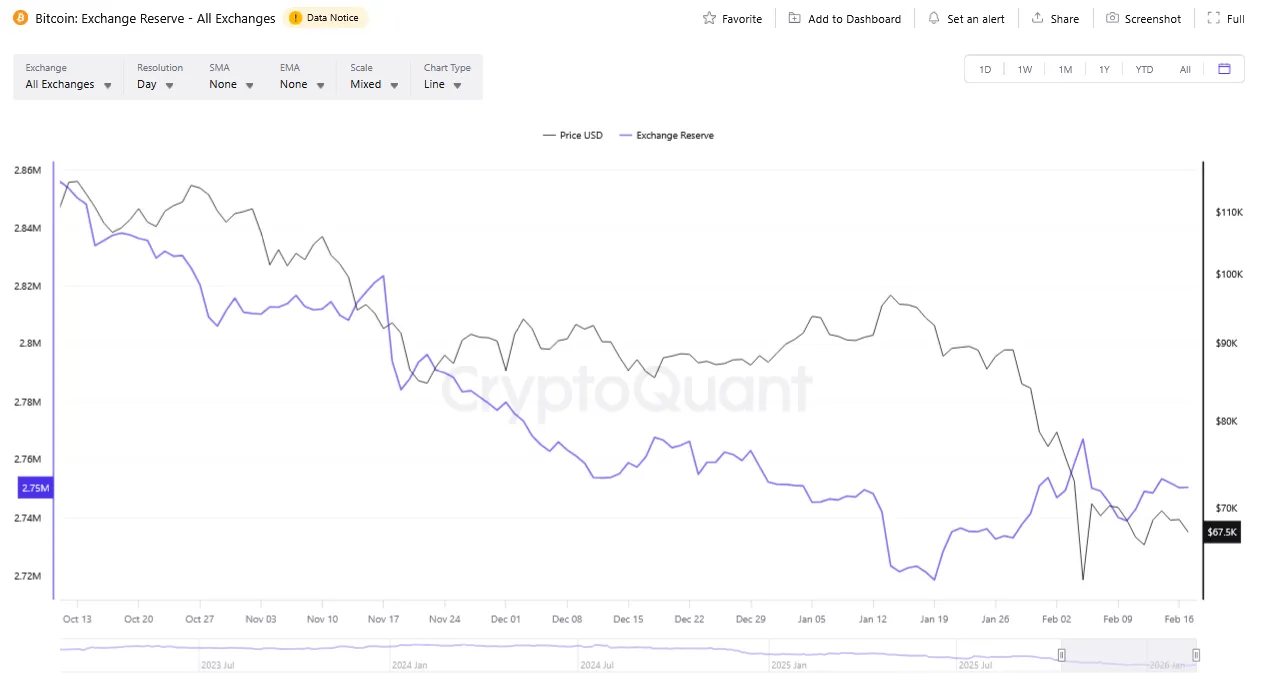
Right after the crash, institutions stepped in quickly and absorbed supply. Exchange reserve data shows Bitcoin balances on exchanges dropped from around 2.86 million BTC to below 2.80 million BTC within weeks. This means more than 60,000 $BTC was removed from exchanges and moved into cold storage. This behavior typically signals accumulation, not selling. ETF flow data confirms this clearly, with nearly 30,000 $BTC flowing into ETFs in just a few days around October 11–13. Coinbase premium also stayed positive during this period, which shows strong US institutional buying. Whale ratio remained stable, meaning whales were not depositing large amounts to exchanges. Funding rates stayed positive but controlled, showing healthy confidence without overheating. This phase clearly marked a structural recovery phase driven by institutional accumulation.

[Image & Data Source: Bitbo & CryptoQuant]

December showed the first structural slowdown


By December, the pace of accumulation slowed. Exchange reserves were still declining, but much more slowly. ETF flows became mixed, with inflows and outflows balancing each other.

Research Image
Source: https://cryptoquant.com/asset/btc/chart/market-data/coinbase-premium-index

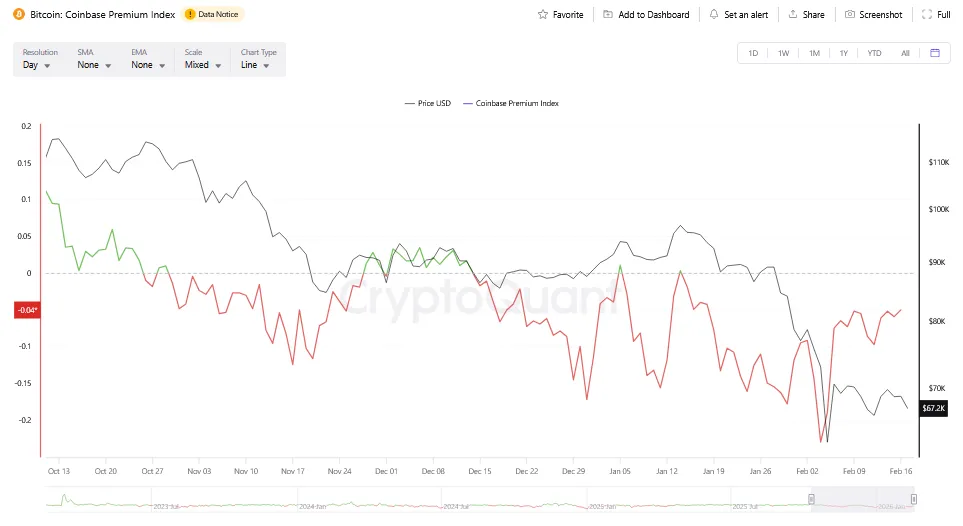
Coinbase premium began turning negative more often, showing that US institutional demand was weakening. Whale ratio started increasing gradually, meaning whales were becoming more active on exchanges. This was not aggressive distribution yet, but it showed that accumulation was no longer dominant. Structurally, this marked the transition from strong accumulation to a neutral phase.

January showed stabilization, but accumulation did not return

Research Image
Research Image

[Source: CryptoQuant]

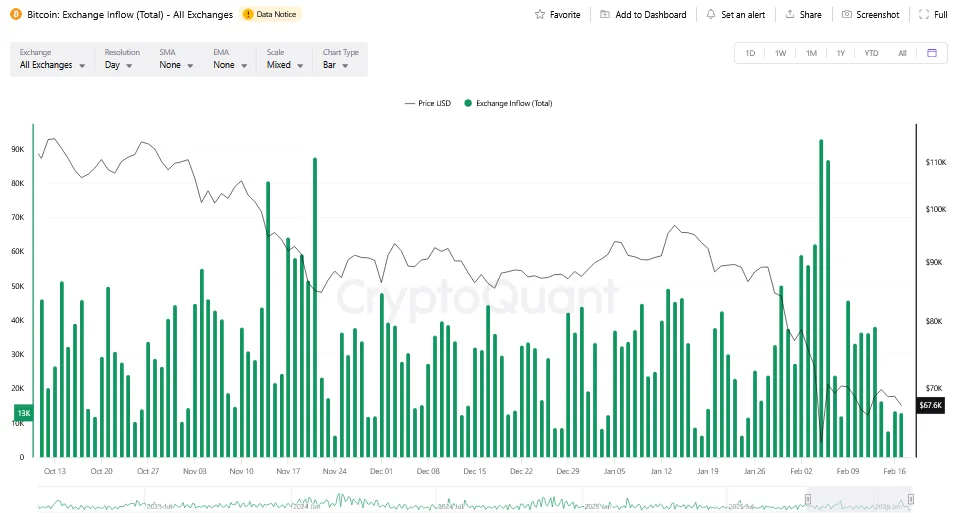
January brought some recovery attempts, but structurally, accumulation did not resume. Exchange reserves stopped declining and started moving sideways. ETF inflows appeared occasionally, but they were inconsistent and weaker compared to October. Coinbase premium stayed mostly negative, confirming weak institutional demand. Whale ratio continued rising slowly, showing increased exchange interaction from large holders. Funding rates remained unstable, showing lack of strong directional conviction. This phase showed structural stabilization, but not structural improvement.

February confirms a shift toward distribution and defensive positioning

February data shows the clearest structural shift. Multiple indicators confirm that institutions and whales have moved from accumulation to risk reduction. The most important structural changes include:

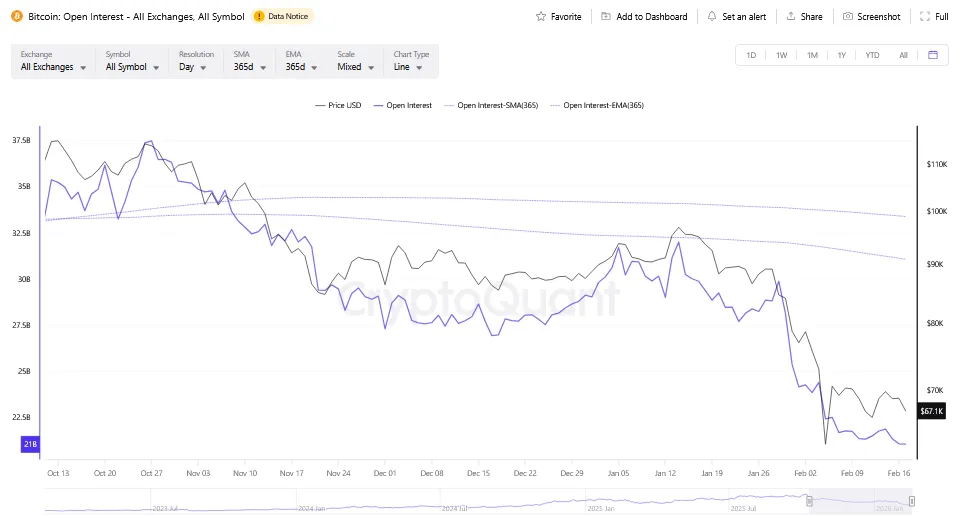
  • Open interest dropped from around $37 billion to near $21 billion, confirming large-scale leverage reduction
  • ETF flows shifted toward consistent outflows, with multiple days showing withdrawals of thousands of $BTC
  • Exchange reserves stopped declining, confirming accumulation has paused
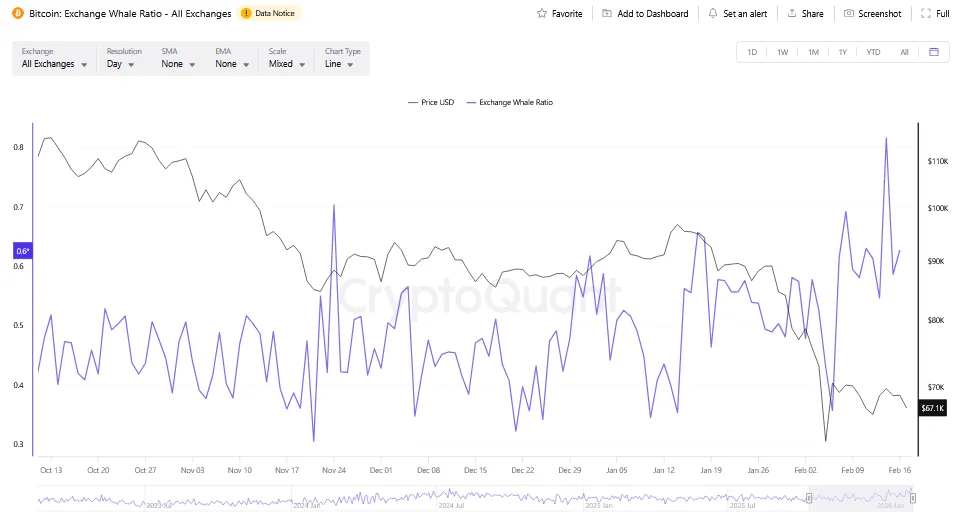
  • Whale ratio spiked above 0.70 and even 0.80, showing whales sending more $BTC to exchanges
  • Coinbase premium stayed negative, confirming weak US institutional demand
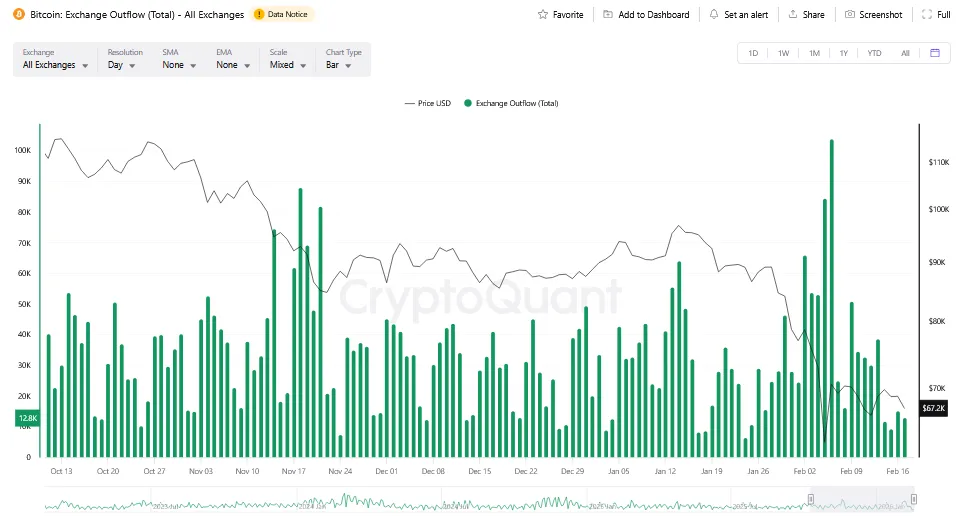
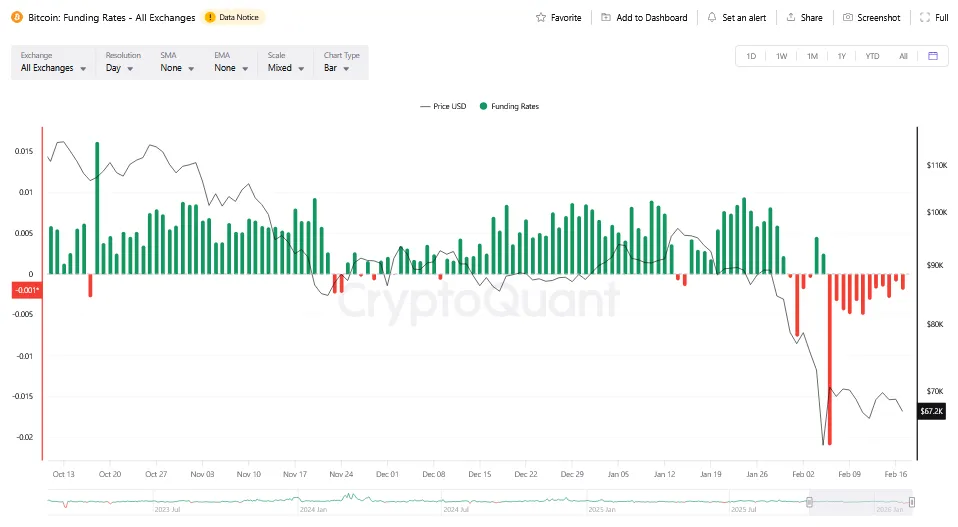
  • Funding rates turned negative consistently, showing defensive positioning in derivatives

These changes confirm a structural shift. Institutions are no longer absorbing supply like they did after the crash.

Structural improvements vs structural weaknesses

Even though the market is showing weakness, it is important to separate structural damage from structural reset. Some parts of the structure have improved since the crash:

Research Image
Research Image
Research Image

Structural improvements:

  • Excess leverage has been removed, making the market healthier long term
  • Panic selling seen during the crash is no longer present
  • Exchange reserves remain significantly lower than pre-crash levels
  • Long-term holders still control a large portion of supply

Structural weaknesses:

  • ETF outflows show institutions are no longer aggressively accumulating
  • Exchange reserves have stopped declining, confirming accumulation paused
  • Whale exchange activity has increased, showing higher distribution risk
  • Coinbase premium remains negative, showing weak institutional demand
  • Open interest collapse confirms institutions reduced exposure

Sponsored

This confirms that while the market is no longer in a crash state, it has also not returned to an accumulation phase.

Final structural conclusion

It is important to understand that some of the current weakness is influenced by macro conditions, but structurally, the bigger change is institutional behavior. After the October crash, institutions accumulated aggressively and removed supply from exchanges. That phase helped stabilize the market. Today, that behavior has stopped. Exchange reserves are no longer declining, ETF flows show more outflows than inflows, whale exchange deposits have increased, and institutional demand has weakened. Structurally, this means the bear phase has improved compared to the crash itself, but accumulation has not returned. The market is now in a fragile equilibrium where selling pressure is lower than during the crash, but strong institutional buying is also missing. Until accumulation returns and liquidity starts entering consistently again, the market will remain structurally fragile rather than structurally strong.

#Bitcoin #CryptoNews #BitcoinAnalysis #CryptoMarket #InstitutionalInvestors #BitcoinETF #CryptoLiquidity #OnChainAnalysis


RESEARCH · Tuesday, February 17, 2026 · 12:46 PM CoinBelieve Intelligence Vol. 2026 · res_6994a9741d9d75.91827733
Research

CoinBelieve

Crypto · Bitcoin · ETF · Derivatives  |  Est. Read: min  |  15 Reads

Bitcoin Accumulation Has Stopped: ETF Outflows and Whale Activity Signal Market Shift

⚡ Quick Briefing
  • Here's the scoop: That strong Bitcoin accumulation phase we saw right after the October crash? It's totally over. All the signs – ETF flows, whale activity, exchange reserves – are screaming that big institutions and whales have stopped buying aggressively and are now in a more cautious, even distributive, mode, making the market much more fragile.
  • The big picture is, we've lost that key institutional buying pressure that was soaking up supply and providing a floor. We're not in a crash, but without those big players consistently entering, the market is in a "fragile equilibrium." This means significant upward momentum is unlikely for now, and we might see more sideways action or even dips until that institutional demand truly returns.
  • So, what to watch out for? Keep a close eye on those ETF outflows – they're no longer net positive. Also, whales are increasingly moving Bitcoin to exchanges, which hints at potential selling or distribution. Until we see consistent accumulation resume and institutions show strong demand again, the market is structurally weak, so tread carefully!

Since the October 10 crash, Bitcoin has gone through a major structural shift. The difference between that period and now is not just price, but how liquidity, institutions, and whales are behaving. Yes, some of the recent weakness is influenced by macro conditions, including tighter liquidity and institutional caution, but this article focuses only on structure — whether the bear phase has improved structurally or not. When you analyze exchange reserves, ETF flows, whale activity, Coinbase premium, funding rates, and open interest together, the message is clear: the strong accumulation phase that followed the crash has ended, and the market structure has moved into a more fragile state.

After the October crash, institutions absorbed supply aggressively
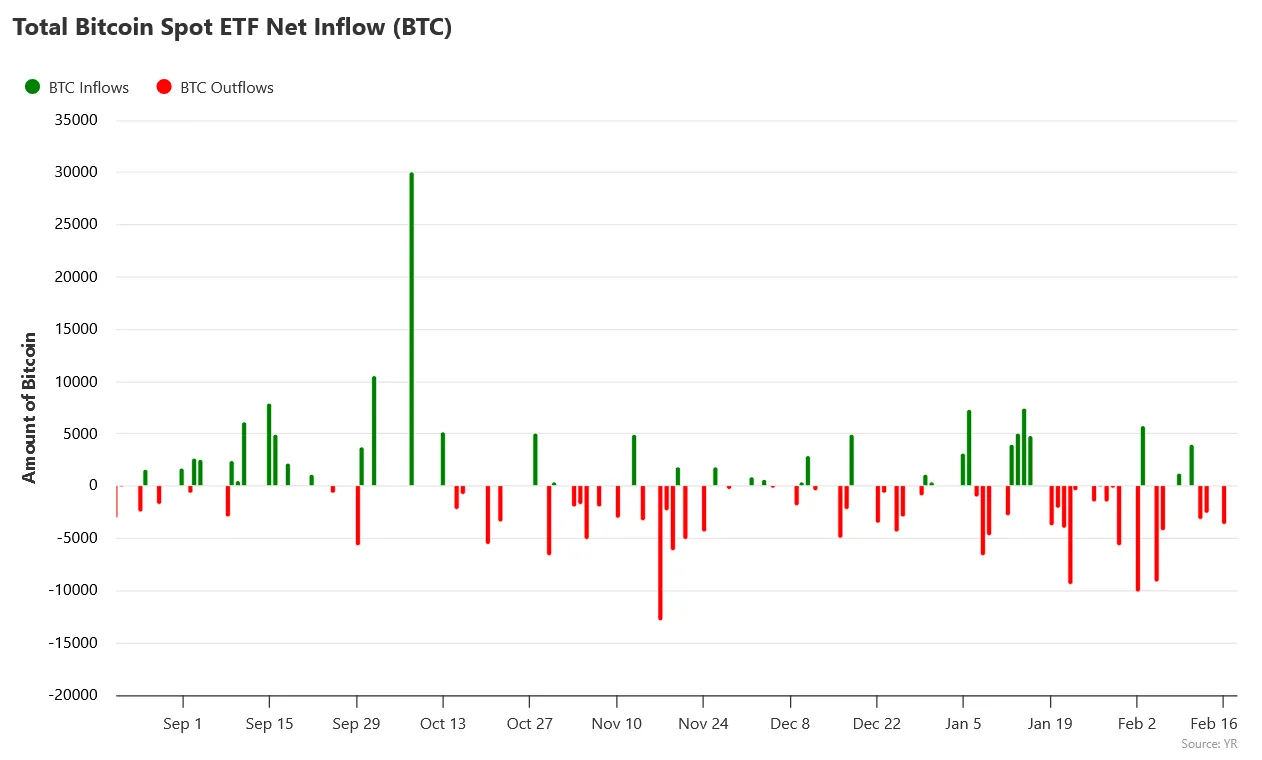
Right after the crash, institutions stepped in quickly and absorbed supply. Exchange reserve data shows Bitcoin balances on exchanges dropped from around 2.86 million BTC to below 2.80 million BTC within weeks. This means more than 60,000 $BTC was removed from exchanges and moved into cold storage. This behavior typically signals accumulation, not selling. ETF flow data confirms this clearly, with nearly 30,000 $BTC flowing into ETFs in just a few days around October 11–13. Coinbase premium also stayed positive during this period, which shows strong US institutional buying. Whale ratio remained stable, meaning whales were not depositing large amounts to exchanges. Funding rates stayed positive but controlled, showing healthy confidence without overheating. This phase clearly marked a structural recovery phase driven by institutional accumulation.

[Image & Data Source: Bitbo & CryptoQuant]

December showed the first structural slowdown


By December, the pace of accumulation slowed. Exchange reserves were still declining, but much more slowly. ETF flows became mixed, with inflows and outflows balancing each other.
Source: https://cryptoquant.com/asset/btc/chart/market-data/coinbase-premium-index

Coinbase premium began turning negative more often, showing that US institutional demand was weakening. Whale ratio started increasing gradually, meaning whales were becoming more active on exchanges. This was not aggressive distribution yet, but it showed that accumulation was no longer dominant. Structurally, this marked the transition from strong accumulation to a neutral phase.

January showed stabilization, but accumulation did not return
[Source: CryptoQuant]

January brought some recovery attempts, but structurally, accumulation did not resume. Exchange reserves stopped declining and started moving sideways. ETF inflows appeared occasionally, but they were inconsistent and weaker compared to October. Coinbase premium stayed mostly negative, confirming weak institutional demand. Whale ratio continued rising slowly, showing increased exchange interaction from large holders. Funding rates remained unstable, showing lack of strong directional conviction. This phase showed structural stabilization, but not structural improvement.

February confirms a shift toward distribution and defensive positioning

February data shows the clearest structural shift. Multiple indicators confirm that institutions and whales have moved from accumulation to risk reduction. The most important structural changes include:

  • Open interest dropped from around $37 billion to near $21 billion, confirming large-scale leverage reduction
  • ETF flows shifted toward consistent outflows, with multiple days showing withdrawals of thousands of $BTC
  • Exchange reserves stopped declining, confirming accumulation has paused
  • Whale ratio spiked above 0.70 and even 0.80, showing whales sending more $BTC to exchanges
  • Coinbase premium stayed negative, confirming weak US institutional demand
  • Funding rates turned negative consistently, showing defensive positioning in derivatives

These changes confirm a structural shift. Institutions are no longer absorbing supply like they did after the crash.

Structural improvements vs structural weaknesses

Even though the market is showing weakness, it is important to separate structural damage from structural reset. Some parts of the structure have improved since the crash:
Structural improvements:

  • Excess leverage has been removed, making the market healthier long term
  • Panic selling seen during the crash is no longer present
  • Exchange reserves remain significantly lower than pre-crash levels
  • Long-term holders still control a large portion of supply

Structural weaknesses:

  • ETF outflows show institutions are no longer aggressively accumulating
  • Exchange reserves have stopped declining, confirming accumulation paused
  • Whale exchange activity has increased, showing higher distribution risk
  • Coinbase premium remains negative, showing weak institutional demand
  • Open interest collapse confirms institutions reduced exposure

This confirms that while the market is no longer in a crash state, it has also not returned to an accumulation phase.

Final structural conclusion

It is important to understand that some of the current weakness is influenced by macro conditions, but structurally, the bigger change is institutional behavior. After the October crash, institutions accumulated aggressively and removed supply from exchanges. That phase helped stabilize the market. Today, that behavior has stopped. Exchange reserves are no longer declining, ETF flows show more outflows than inflows, whale exchange deposits have increased, and institutional demand has weakened. Structurally, this means the bear phase has improved compared to the crash itself, but accumulation has not returned. The market is now in a fragile equilibrium where selling pressure is lower than during the crash, but strong institutional buying is also missing. Until accumulation returns and liquidity starts entering consistently again, the market will remain structurally fragile rather than structurally strong.

#Bitcoin #CryptoNews #BitcoinAnalysis #CryptoMarket #InstitutionalInvestors #BitcoinETF #CryptoLiquidity #OnChainAnalysis


© 2026 CoinBelieve · All Rights Reserved · coinbelieve.com
Newspaper Mode
Success