
Quick Briefing
- Here's the scoop: While most folks were panicking and taking losses as Bitcoin's price dropped between November and February, big institutions like MicroStrategy and Tether were actually scooping up tons of BTC. They weren't selling; they were buying cheap from all the "forced sellers" – think leveraged traders getting liquidated and short-term players bailing out. It was a massive transfer of ownership from weak hands to strong, patient ones.
- The big picture is this is a totally new game compared to past cycles. Instead of big players dumping on retail during highs, they're now accumulating during fear. This means a huge chunk of Bitcoin supply is moving into hands that aren't worried about short-term swings or margin calls. It reshapes who really controls the supply, potentially setting the stage for more stability and upside when the market eventually turns, as these new owners are "built to wait."
- But here's the catch: this shift doesn't mean prices are going to skyrocket tomorrow. Institutions are accepting some hefty paper losses right now due to accounting rules, even while buying more. So, while they're built for the long haul, watch out for continued market instability; their conviction will be tested if the slump drags on, and it won't magically prevent more short-term pain for the impatient.
The market is weak right now. Price stays under pressure, rebounds fail quickly, and confidence is thin. In this kind of environment, most participants focus on what is going wrong. Institutions focus on something else: who is being forced to sell. That difference explains why losses are piling up on one side of the market while accumulation continues on the other.
Between November and February, Bitcoin did not break. Ownership shifted.
Weak markets reveal forced sellers
MicroStrategy: buying while reporting losses
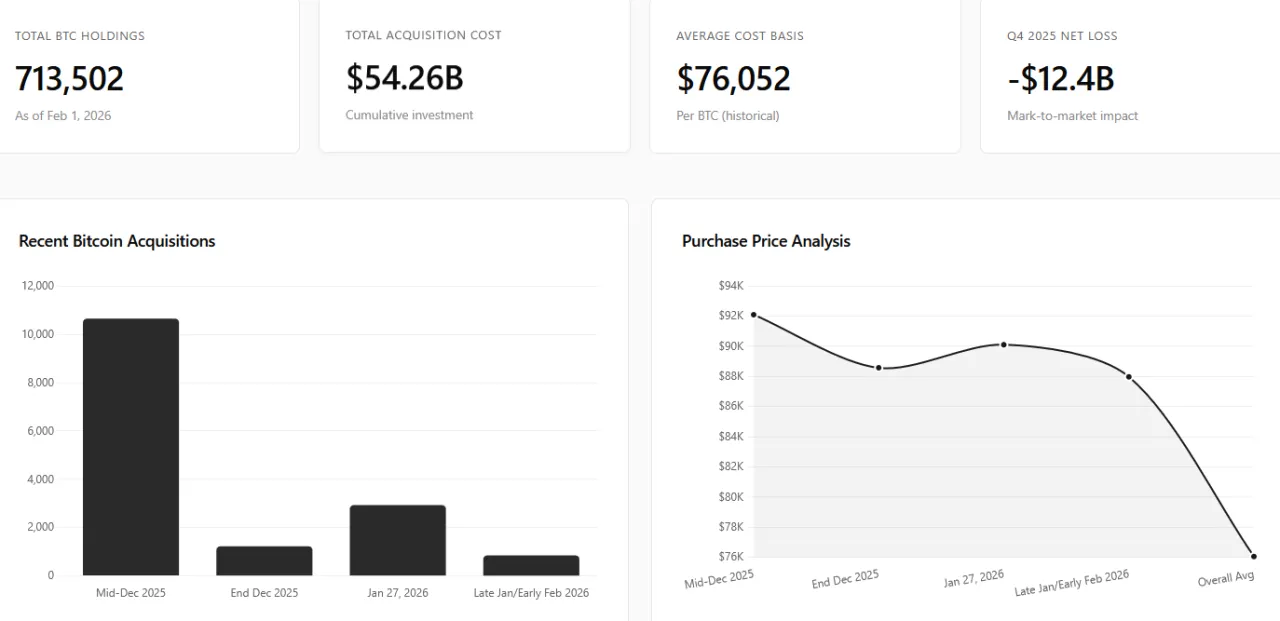
Accumulation:
- November 2025: about 8,700 $BTC added
- December 2025: about 11,800 BTC added
- January 2026: about 41,000 BTC added
- Total holdings by early February: roughly 713,500 BTC
- Estimated average cost: around $76,000 per BTC
- Q4 2025 reported loss: around $12.4B, largely from accounting impairment
Metaplanet: the same logic, smaller scale
- Q4 2025 purchases: about 4,279 BTC
- Total holdings by early 2026: about 35,102 $BTC
- Estimated average cost: around $107,700 per BTC
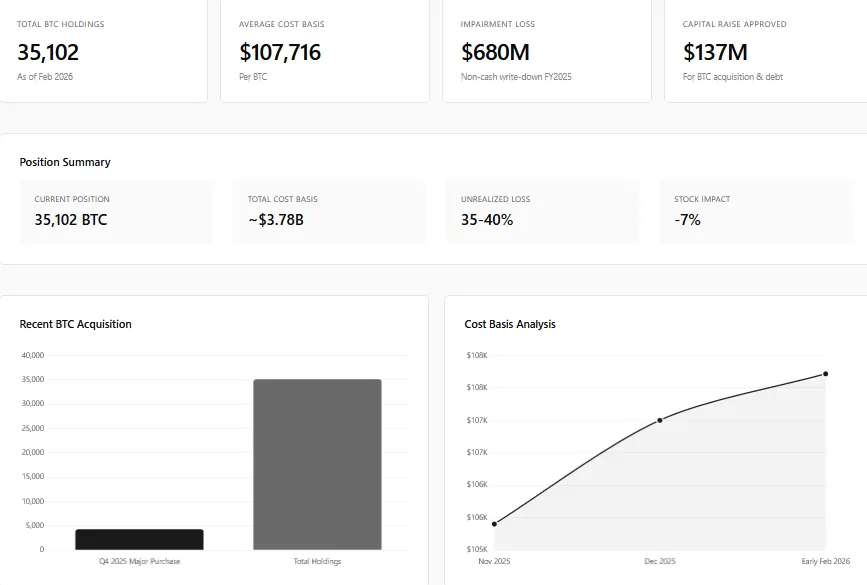
Reported impact:
Unlock Full Analysis
You've reached the end of the preview. Join CoinBelieve to read the rest of this report and access exclusive crypto intelligence.

About Meow Alert
Crypto analyst and researcher with 13k+ followers on Binance Square. Focused on on-chain data and market structure.
Intelligence Stream
Trump Loses Tariff Power: Why This Could Trigger the Next Crypto Bull Run
Bitcoin Accumulation Has Stopped: ETF Outflows and Whale Activity Signal Market Shift
Massive Ethereum Shift: $542M ETH Inflows, Whale Shorts and Dormant Wallet Wake
Bitcoin Whale Activity Surges: $600M+ BTC Flows Toward Exchanges
CoinBelieve
Understanding Bitcoin Accumulation: Why Institutions Buy While Others Take the Loss
⚡ Quick Briefing
- Here's the scoop: While most folks were panicking and taking losses as Bitcoin's price dropped between November and February, big institutions like MicroStrategy and Tether were actually scooping up tons of BTC. They weren't selling; they were buying cheap from all the "forced sellers" – think leveraged traders getting liquidated and short-term players bailing out. It was a massive transfer of ownership from weak hands to strong, patient ones.
- The big picture is this is a totally new game compared to past cycles. Instead of big players dumping on retail during highs, they're now accumulating during fear. This means a huge chunk of Bitcoin supply is moving into hands that aren't worried about short-term swings or margin calls. It reshapes who really controls the supply, potentially setting the stage for more stability and upside when the market eventually turns, as these new owners are "built to wait."
- But here's the catch: this shift doesn't mean prices are going to skyrocket tomorrow. Institutions are accepting some hefty paper losses right now due to accounting rules, even while buying more. So, while they're built for the long haul, watch out for continued market instability; their conviction will be tested if the slump drags on, and it won't magically prevent more short-term pain for the impatient.
The market is weak right now. Price stays under pressure, rebounds fail quickly, and confidence is thin. In this kind of environment, most participants focus on what is going wrong. Institutions focus on something else: who is being forced to sell. That difference explains why losses are piling up on one side of the market while accumulation continues on the other.
Between November and February, Bitcoin did not break. Ownership shifted.
Weak markets reveal forced sellers
MicroStrategy: buying while reporting losses
Source: Microstrategy Official / Self-generated-chart
Accumulation:
- November 2025: about 8,700 $BTC added
- December 2025: about 11,800 BTC added
- January 2026: about 41,000 BTC added
- Total holdings by early February: roughly 713,500 BTC
- Estimated average cost: around $76,000 per BTC
- Q4 2025 reported loss: around $12.4B, largely from accounting impairment
Metaplanet: the same logic, smaller scale
- Q4 2025 purchases: about 4,279 BTC
- Total holdings by early 2026: about 35,102 $BTC
- Estimated average cost: around $107,700 per BTC
Source: Reuters, Yahoo Finance / Self-Generated-Chart
Reported impact:
Unlock Full Analysis
You've reached the end of the preview. Join CoinBelieve to read the rest of this report and access exclusive crypto intelligence.
"Crypto analyst and researcher with 13k+ followers on Binance Square. Focused on on-chain data and market structure...."
View Full Profile →Trump Loses Tariff Power: Why This Could Trigger the Next Crypto Bull Run
15 reads · Feb 21, 2026
Bitcoin Accumulation Has Stopped: ETF Outflows and Whale Activity Signal Market Shift
16 reads · Feb 17, 2026
Massive Ethereum Shift: $542M ETH Inflows, Whale Shorts and Dormant Wallet Wake
14 reads · Feb 16, 2026
Crypto DeFi Bitcoin Macro ETF DerivativesWallet Required
You need an active CBX Wallet to send tips. Please create or restore one in your dashboard.