Quick Briefing
- Here's the scoop: The US crypto market structure bill is totally stuck, not because of bad timing, but because powerful interests – like traditional banks, the SEC, and the CFTC – are locked in a deep battle over who gets to control the future financial system, especially around stablecoins and regulatory power.
- The big picture is that these ongoing delays are significantly slowing down institutional participation, keeping legal risks high, and putting a damper on positive momentum for crypto in the US. It basically means less clarity and slower growth for the market here.
- So, what to watch out for? Expect these postponements to be the new normal until there's a real compromise on stablecoin rewards, a clear line drawn between the SEC and CFTC's authority, and renewed public support from at least one major US crypto exchange.
The ongoing delay of the U.S. crypto market structure bill is not the result of procedural issues or bad timing. It is the result of unresolved economic and regulatory conflicts that lawmakers have not been able to bridge.
At its core, this legislation determines who will control large parts of the future financial system. Until that question is settled, progress will remain slow.
Two Committees, Two Regulatory Philosophies
The bill is being shaped primarily by two Senate committees.
The Senate Banking Committee traditionally supports frameworks that mirror existing financial regulation. This means strong investor protections, bank-style compliance, and heavy involvement from the Securities and Exchange Commission (SEC).
The Senate Agriculture Committee, which oversees the Commodity Futures Trading Commission (CFTC), favors treating many digital assets as commodities rather than securities. This approach is generally more flexible for trading platforms and derivatives markets.
Both committees have produced draft language. Those drafts differ on definitions, enforcement authority, and market structure. Before any bill can move forward, these differences must be reconciled. That reconciliation has not happened.
Without agreement at the committee level, a floor vote is not realistic.
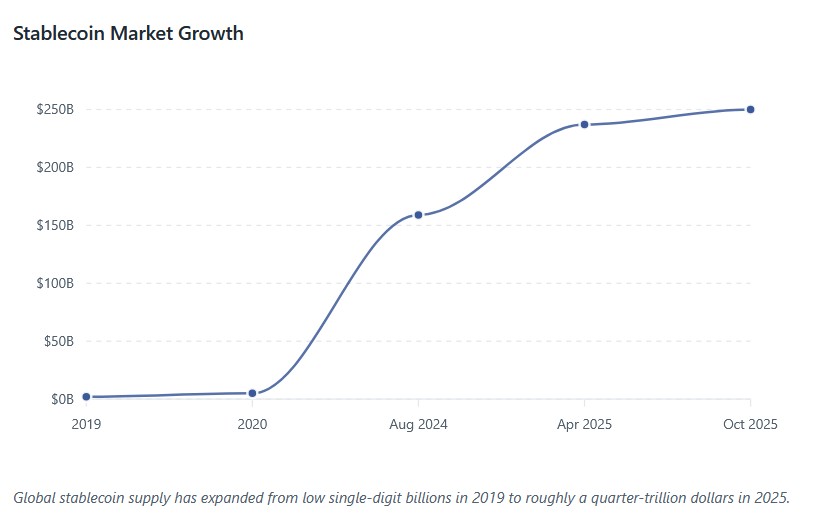
Stablecoins Are the Central Economic Conflict
The most divisive issue is whether payment stablecoins should be allowed to offer interest-like rewards.
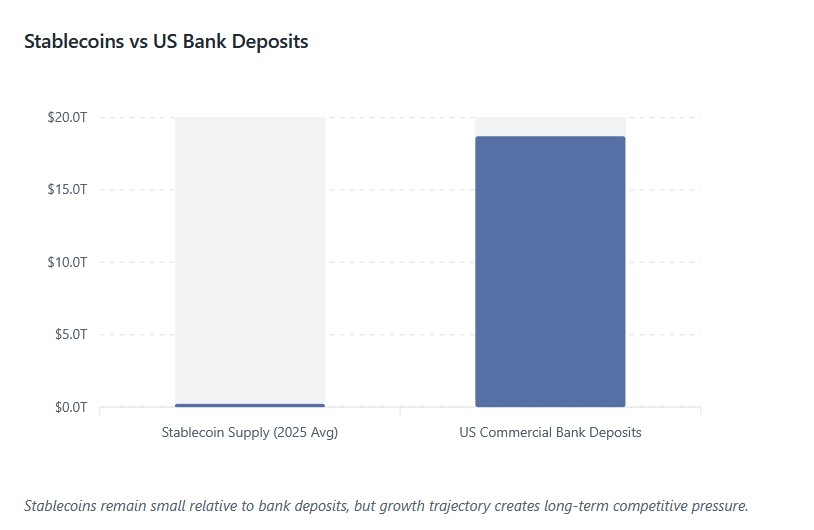
U.S. banks currently hold approximately $17–18 trillion in customer deposits. Stablecoins that pay yield represent a direct competitive threat to those deposits.
Banking trade groups argue that even a small percentage shift from deposits into stablecoins could materially weaken bank balance sheets and reduce lending capacity. Policy discussions around this topic often reference multi-trillion-dollar exposure scenarios over time.
Crypto companies argue that banning rewards does not eliminate demand. It simply pushes users to offshore platforms and unregulated products, reducing U.S. competitiveness and oversight.
Both arguments carry weight.
Neither side has agreed to compromise.
This single issue has become the largest obstacle inside the bill.
Industry Support Is No Longer Unified
Large legislation usually advances faster when major industry players publicly support it. That condition no longer exists.
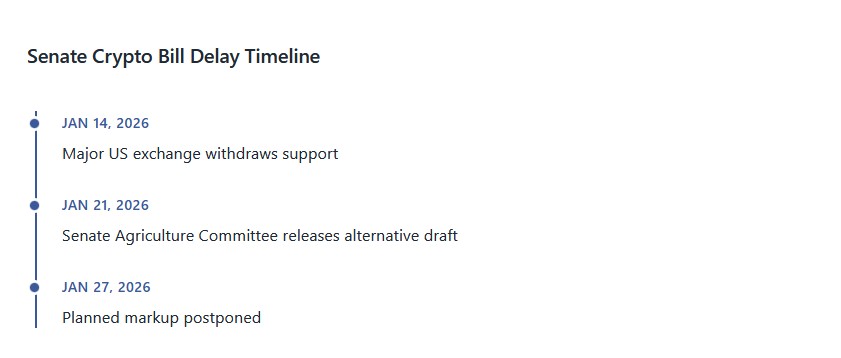
Source: Congressional hearing schedule public records; Senate committee press releases; Coinbelieve timeline reconstruction (2026)
When a leading U.S. exchange withdrew support for the Senate banking draft, it signaled to lawmakers that the bill does not reflect industry consensus.
From a political standpoint, moving forward without major industry backing increases the risk of public opposition campaigns, negative media coverage, and heavy amendment activity.
Committees generally avoid pushing controversial bills under those conditions.
Instead, they return to negotiations.
Negotiations create delay.
SEC vs CFTC Jurisdiction Remains Unresolved
Another major barrier is regulatory authority.
The SEC wants broad control over tokens it views as securities.
The CFTC wants primary oversight of spot crypto markets and commodity-like tokens.
These are not minor disagreements. Regulatory jurisdiction determines enforcement power, budget growth, and long-term relevance.
Lawmakers aligned with each agency resist language that weakens their preferred regulator.
As a result, definitions and scope keep changing.
Each change forces new technical review.
Complexity Magnifies the Problem
Recent drafts of the bill are close to 300 pages.
Large financial legislation of this size typically takes months to move even when political alignment exists.
Here, alignment does not exist.
More pages lead to:
- More carve-outs
- More exceptions
- More legal interpretation
Each addition increases friction.
Logistics Are Not the Real Cause
Weather disruptions and scheduling conflicts have been cited as reasons for postponement.
If consensus existed, committees would simply reschedule and proceed.
They have not.
That strongly suggests the real problem is unresolved policy conflict, not logistics.
What This Means for Markets
Markets respond to expectations.
Earlier expectations assumed steady progress toward U.S. regulatory clarity. That supported risk appetite.
Repeated delays push clarity further into the future.
When clarity is delayed:
- Institutional participation slows
- Legal risk remains elevated
- Valuations face pressure
This does not signal collapse.
It signals slower positive momentum.
What Would Enable Progress
Three developments are necessary:
- A compromise framework for stablecoin rewards
- Clear statutory boundaries between SEC and CFTC authority
- Renewed public support from at least one major U.S. exchange
Until then, postponements should be considered normal.
Final Assessment
The Senate is not deciding whether crypto should exist.
It is deciding who controls its economic upside.
Until that question is resolved, U.S. crypto regulation will continue to stall.
Not because lawmakers are confused.
But because the stakes are enormous.

About Meow Alert
Crypto analyst and researcher with 13k+ followers on Binance Square. Focused on on-chain data and market structure.
Intelligence Stream
BTC Near $80K — Data Shows Liquidity Build, But Macro Is Holding It Back
17 Reads
Author Update
Europe’s Rate Hike Signal: A Liquidity Shift That Crypto Markets Are Underestimating
20 Reads
Author Update
Trump Loses Tariff Power: Why This Could Trigger the Next Crypto Bull Run
27 Reads
Author Update